
Moringa for Milk Supply: Why This Breastfeeding Herb Is Having a Moment
|
7 min

|
7 min
Moringa is having a moment.
It’s on your feed. It’s in breastfeeding forums. It’s being recommended by lactation consultants, passed around in mom groups, and saved in screenshots titled “things to try when supply feels weird.”
When you’re breastfeeding, few things feel more consuming than wondering if your baby is getting enough milk. One sleepy feed, one softer-than-usual breast, one pump session that looks suspiciously low, and suddenly you’re spiraling at 2 a.m. with 14 browser tabs open.
First: take a breath.
Milk supply is complicated. It can be affected by latch, feeding frequency, pumping output, hormones, stress, sleep, hydration, nutrition, and about a dozen other things no one warned you about.
Moringa isn’t magic. It’s not a replacement for feeding support, frequent milk removal, or working with an IBCLC if something feels off.
But it is one of the most talked-about herbs in the lactation world for a reason.
Moringa, also known as Moringa oleifera, is a nutrient-dense plant traditionally used in many parts of Asia and Africa. Its leaves are often dried and used in powders, teas, capsules, foods, and supplements.
In the Philippines, moringa is commonly known as malunggay and has a long history of traditional use for breastfeeding support. In lactation circles, moringa is considered a galactagogue, which is a fancy word for something traditionally used to support milk production.
Not exactly casual dinner conversation, but very relevant when you’re counting wet diapers.
Moringa leaves naturally contain vitamins, minerals, amino acids, and plant compounds, which is part of why the plant has earned so much attention in nutrition and lactation research. (1)
Because breastfeeding parents are smart, resourceful, and deeply tired of vague advice.
“Just drink more water.”
“Just nurse more.”
“Just relax.”
Respectfully: lol.
Moms deserve support that feels practical, grounded, and easy to fit into real life. Moringa checks a lot of those boxes because it has both traditional use and emerging research behind it.
You’ll see moringa mentioned in a few common ways:
“My lactation consultant recommended it.”
“It’s the only thing I’m doing differently.”
“I’ve seen really good reviews, so I’m curious.”
“I want something fenugreek-free.”
“I need support, but I don’t want a complicated routine.”
That last one is big.
Because when you’re breastfeeding, the best routine is the one you can actually repeat. Not the one that requires a color-coded supplement chart, three alarms, and the mental clarity of someone who slept eight uninterrupted hours. Couldn’t be us.
Here’s the simple version: moringa is traditionally used to support milk production and healthy prolactin levels.
Prolactin is one of the hormones involved in milk production. It helps signal your body to make milk, especially in response to frequent nursing or pumping.
That said, breastfeeding is not just “take herb, make milk.” Your body still depends heavily on milk removal. The more often milk is effectively removed, the stronger the signal to keep making it.
So moringa may be supportive, but it works best as part of the bigger picture:
Frequent nursing or pumping
Effective latch or flange fit
Enough calories and fluids
Rest when possible
Stress support where you can get it
Professional help if supply concerns persist
Moringa can be one tool in the toolkit. Not the whole toolbox.
Moringa has been used for generations, especially in the Philippines, to nourish postpartum mothers and support healthy lactation. And while it may be trending now, this isn’t a brand-new discovery; it has a long history as a traditional galactagogue, meaning an herb used to support milk production.
The research is encouraging, too.
One double-blind, randomized controlled trial looked at 68 postpartum mothers of preterm infants who were pumping milk for babies in the NICU. Mothers were given either malunggay (Moringa oleifera) leaf capsules or a placebo from postpartum days 3 to 5. By day 3, the moringa group produced more milk than the placebo group, and by days 4 and 5, the difference became statistically significant. On day 5, mothers taking moringa produced an average of 319.7 mL compared to 120.2 mL in the placebo group. (2)
Another study published in Belitung Nursing Journal looked at moringa’s effect on prolactin levels and breast milk production in postpartum mothers. Prolactin is one of the key hormones involved in making milk. When baby nurses or milk is removed, prolactin helps signal the body to keep producing. In the study, mothers who received moringa had significantly higher prolactin levels compared with the control group, supporting moringa’s traditional use for lactation support. (3)
So, the big picture? Moringa has both traditional wisdom and clinical research behind its role in supporting milk production and healthy prolactin levels. It’s not magic, and it doesn’t replace frequent milk removal, proper latch, pumping support, hydration, nutrition, or help from an IBCLC when needed. But for many breastfeeding moms, moringa can be a meaningful tool in the milk-support toolkit.
Fenugreek has been one of the most well-known lactation herbs for years, but it’s not everyone’s best fit.
Some moms avoid fenugreek because of digestive discomfort, personal sensitivity, medication considerations, or simply because they prefer a different herbal option.
That’s one reason moringa has become such a popular alternative. It gives moms another way to explore lactation support without relying on fenugreek.
Again, everyone is different. What works beautifully for one person may feel meh for another. That doesn’t mean you did anything wrong. It means bodies are bodies, not vending machines.
This is where She’s Flowing comes in.
She’s Flowing is a grab-and-go lactation support drink mix designed to combine hydration and milk flow support in one simple daily routine.*
Because yes, hydration matters while breastfeeding. And also yes, hydration alone is not always the full story.
She’s Flowing brings together:
Moringa
Goat’s Rue
Milk Thistle
Coconut Water
Moringa, Goat’s Rue, and Milk Thistle are traditionally used to support milk production and lactation, while Coconut Water helps support hydration with naturally occurring electrolytes like potassium.*
The goal is simple: support your milk flow while you hydrate.
No scoops.
No measuring.
No extra mental load.
Tear, mix, sip, flow.
It’s the kind of routine that makes sense for a mom who has a pump bag in the car, snacks in three different places, and approximately 47 tabs open in her brain.
There’s no one perfect time. The best time is the time you’ll actually remember.
That said, She’s Flowing fits especially well into evening routines:
During an evening pump
After baby’s bedtime feed
While prepping bottles for the next day
During your “finally sitting down” moment
Before overnight feeds
Many moms like using She’s Flowing in the evening as a simple way to support milk flow overnight, especially when nighttime and early morning feeds or pumps are part of their breastfeeding rhythm.*
But truly? Morning, midday, evening — pick the moment that works with your life.
Consistency beats perfection every time.
She’s Flowing is a tasty daily sip, but it’s not the only place you’ll find moringa in the Legendairy Milk lineup.
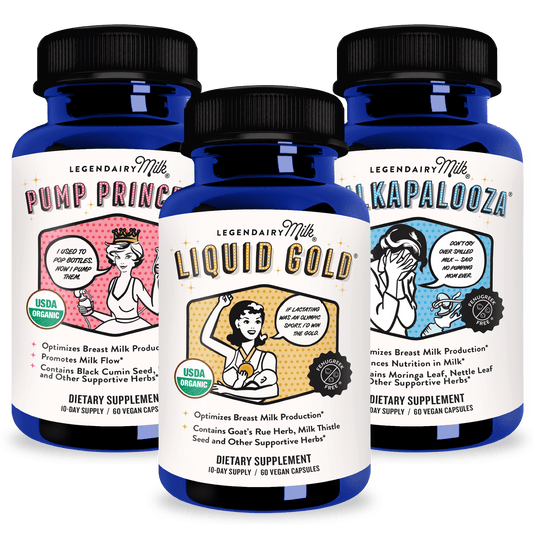
Milkapalooza is one of our capsule lactation supplements that includes moringa as part of a targeted breastfeeding support blend.* It’s a great option for moms who prefer capsules and want a more traditional supplement format.
Cash Cow is another capsule formula that features moringa in a blend designed to support milk production and milk nutrition.* It’s an easy option if capsules are already part of your routine.
Here are a few low-effort ways to build moringa into your day:
Keep your favorite moringa supplement next to your pump parts or pumping station. Pump starts, drink starts. Easy habit anchor.
Mix She’s Flowing after dinner or before your bedtime routine. This works especially well if you’re trying to support your overnight breastfeeding rhythm.
Toss it into your pump bag, diaper bag, work bag, or car. Future you deserves nice things.
Mix She’s Flowing with cold water, ice, and a squeeze of lemon or lime. Add a splash of coconut water if you want to feel a little fancy. No bartender required.
Moringa works best when the basics are also getting attention: frequent milk removal, adequate calories, fluids, rest when possible, and lactation support if needed.
If you’re worried about low milk supply, please know that you’re not alone.
Sometimes supply concerns are about milk production. Sometimes they’re about latch, transfer, flange fit, pumping schedule, feeding expectations, or normal baby behavior that looks suspiciously chaotic because babies are, in fact, chaotic.
A lactation consultant can help you figure out what’s actually going on. Moringa can be supportive, but it should not replace personalized care when you need it.
Moringa is having a moment because moms are talking. They’re comparing notes, asking great questions, and looking for breastfeeding support that feels realistic.
And we love that.
Moringa has a long history of traditional use, growing research interest, and a well-earned place in the lactation conversation. It’s not a miracle. It’s not a guarantee. But it can be a meaningful part of a supportive breastfeeding routine.
She’s Flowing makes that routine easier by putting Moringa, Goat’s Rue, Milk Thistle, and Coconut Water into one simple daily drink mix.*
Because breastfeeding is already doing the most. Your support routine doesn’t have to.
Shop this Blog
She's Flowing Lactation Drink Mix
$29.99